

Church Unity Is Impossible Without This One Thing (Acts 15)
Why the early church was willing to give up personal freedoms for the sake of the gospel—and why we should too

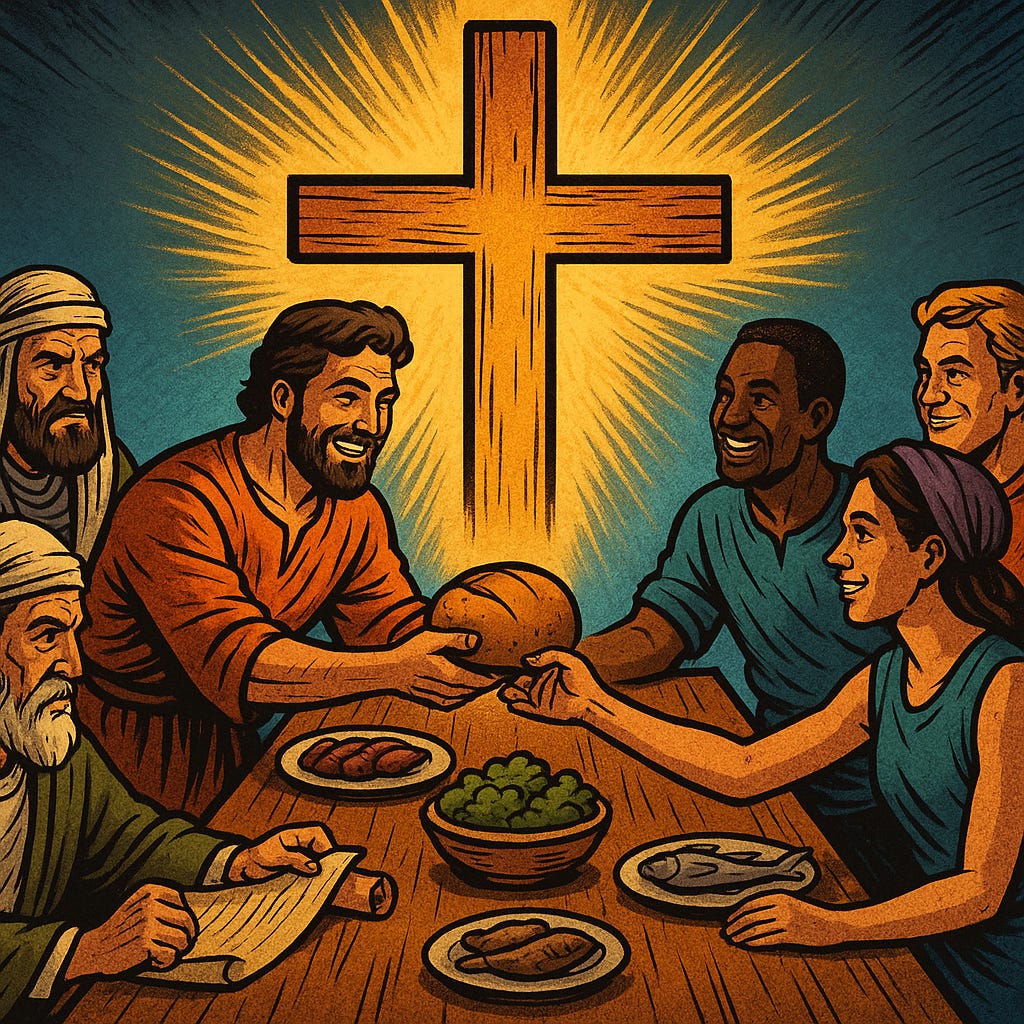
When Personal Preferences Threaten God’s Mission ✋
Most church fights don’t start over the gospel—they start over personal preferences we’ve elevated above God’s mission.
That’s exactly what was happening in Acts 15. The early church was on the verge of a split—not because anyone denied Jesus was the Messiah, but because some believers insisted that Gentiles (non-Jews) had to adopt Jewish customs to truly belong.
For Jewish believers, those customs weren’t small things. Circumcision, dietary laws, and ceremonial purity had been part of their identity for centuries. To them, asking Gentiles to follow these rules seemed reasonable. To Gentiles, it felt like adding barriers Jesus never required.
Peter stood up in the middle of the debate and said:
“So why are you now challenging God by burdening the Gentile believers with a yoke that neither we nor our ancestors were able to bear? We believe that we are all saved the same way, by the undeserved grace of the Lord Jesus.”
— Acts 15:10–11
This wasn’t just a theological debate. It was about whether believers from radically different cultures could sit at the same table, share the same mission, and call each other family. And the way they resolved it still has the power to heal divisions in the church today.
The Day the Church Almost Split ⚡
Acts 15 opens in Antioch, one of the most culturally diverse churches in the ancient world. Jews and Gentiles were worshiping together, eating together, and growing together in Christ. It was beautiful… until a group from Judea arrived with a troubling message:
“Unless you are circumcised as required by the law of Moses, you cannot be saved.”
— Acts 15:1
To understand how loaded this statement was, you have to remember:
Circumcision wasn’t just surgery — it was the sign of God’s covenant with Abraham (Genesis 17:10–14).
The Law of Moses wasn’t just rules — it was the foundation of Jewish identity, covering everything from food to worship to daily life.
Gentiles were outsiders — In Jewish culture, they were “unclean” unless they adopted these laws.
So when Jewish believers told Gentiles, “You need to do this to be saved,” they weren’t just suggesting a helpful next step. They were adding cultural requirements to the gospel.
Peter—who had already witnessed God pour out the Holy Spirit on Gentiles in Acts 10—challenged this thinking:
“God knows people’s hearts, and he confirmed that he accepts Gentiles by giving them the Holy Spirit, just as he did to us. He made no distinction between us and them, for he cleansed their hearts through faith.”
— Acts 15:8–9
The gospel was clear: salvation came by grace through faith in Jesus alone—not by adopting someone else’s cultural customs.
Key Takeaways:
The issue wasn’t whether Jewish customs were bad—it was making them essential for belonging to God’s family.
Turning personal convictions into gospel requirements distorts the message of grace.
From Then to Now: Why This Still Hits Home
The cultural clash in Acts 15 might seem ancient, but the heart of the problem is alive and well—because it’s not about food laws, it’s about the human tendency to turn personal preferences into spiritual requirements.
Today, our “circumcision debate” might sound like:
“Real Christians only sing hymns.”
“If you vote for that party, you can’t possibly follow Jesus.”
“You can’t be a believer if you drink alcohol.”
“If your church doesn’t look like mine, it’s not biblical.”
Just like in the first century, these aren’t always about salvation on paper—but in practice, they create invisible walls that say, You’re not fully in unless you do it my way.
The Subtle Danger:
We confuse culture with Christianity — Just because something is part of our faith tradition doesn’t mean it’s a requirement for salvation.
We elevate personal convictions to God’s commands — Romans 14 reminds us that one believer might have freedom in an area another doesn’t, and that’s okay.
We trade mission for uniformity — Jesus prayed for unity in John 17, not that we’d all have the same style, background, or traditions.
What’s at Stake?
When we make non-essentials into essentials, we:
Weaken our witness to the world (John 13:35).
Push away believers who feel they don’t “fit in.”
Waste energy fighting each other instead of advancing the gospel.
Key Takeaways:
Non-essential differences can still cause real division if we treat them like salvation issues.
Unity requires us to see beyond our own background, preferences, and culture.
The church’s witness to the world depends on our ability to love across differences.
When Grace Changes the Conversation 💡
At the heart of Acts 15 is this reality: The gospel frees us from performing for God’s approval—but it also calls us to lay down our rights for the sake of others.
The council’s decision wasn’t a win for one side and a loss for the other. It was a picture of the gospel in action:
Jewish believers released centuries-old requirements.
Gentile believers gave up freedoms they technically had the right to keep.
💭 When the council chose love over liberty, they were reflecting the heart of Jesus—the One who gave up the highest place for the lowest cross, so that enemies could become family.
Paul would later write in Philippians 2:5–8 that Jesus laid down His rights, humbling Himself for our sake. If He could trade heaven’s throne for a cross, we can set aside personal preferences for the sake of His people.
Key Takeaways:
The gospel removes the need to earn salvation, freeing us from performance-based faith.
True unity comes when both sides are willing to sacrifice, not just one.
Jesus is our model—laying down rights, preferences, and comfort for the sake of love and mission.
Living This Out in Real Life 🛠️
The Jerusalem Council’s decision in Acts 15 wasn’t about who “won” the argument. It was about protecting unity and keeping the mission of Jesus front and center. That same principle can reshape the way we live and lead today.
Practical, Grace-Filled Actions You Can Take:
Identify your “non-essentials.”
Listen before you react.
Lay something down—on purpose.
Prioritize the table over the soapbox.
Pray for a Philippians 2 heart.
Reflection Questions:
Is there an area where my freedom in Christ might be a stumbling block for someone else?
Have I ever avoided fellowship with a believer because of a non-essential difference?
What is one tangible way I can build unity in my church this week?
Key Takeaways:
Unity doesn’t mean agreeing on everything—it means loving across differences.
Laying down a personal freedom is not weakness; it’s Christlike strength.
Protecting the mission is more important than protecting our preferences.
The Final Word ✨
Acts 15 reminds us that the gospel tears down walls—but our pride can build them right back up. Unity in the church isn’t about everyone agreeing on every detail; it’s about loving each other enough to let go of what doesn’t ultimately matter.
When we trade personal rights for the sake of Christ’s mission, we aren’t losing—we’re living like the One who gave up everything to make us His.
If You Haven’t Met Jesus Yet… ✝️
The council in Acts 15 settled the question once and for all: we are saved by the grace of the Lord Jesus—nothing more, nothing less.
If you’ve been carrying the weight of thinking you have to earn God’s acceptance—or if someone told you that Jesus alone isn’t enough—hear this:
“We believe that we are all saved the same way, by the undeserved grace of the Lord Jesus.”
That grace is for you. Right now. As you are.
A Simple Prayer to Begin Following Jesus:
“Jesus, I believe You are the Son of God. I believe You died for my sins and rose from the dead. I can’t save myself, but You promised to save anyone who trusts in You. I’m putting my life in Your hands—be my Lord, my Savior, and my guide from this day forward. Amen.”
If you already belong to Christ, ask Him to show you where you can lay down your rights for the sake of unity. The gospel you proclaim is most believable when it’s visible in how you love.
If you have made a decision to follow Christ, don’t walk this journey alone. I’d love to walk with you. Feel free to leave a comment or direct message me.
📣 Subscribe + Share
If this post encouraged or challenged you, don’t keep it to yourself—
Subscribe to Truth Isn’t Trending for weekly, Scripture-rich encouragement.
Share this with someone who’s been wrestling with church division or struggling to find their place in the body of Christ.
🌿 A Gentle Start to an Unhurried Life (Free 7-Day Devotional)
Feeling spiritually worn out? This free devotional, A Gentle Start to an Unhurried Life, will help you slow down, breathe deeply, and rest in Jesus without guilt.
📥 Download it here
📖 Unhurried and Held (For Moms)
Motherhood is full of noise, demands, and constant motion—but your soul doesn’t have to run on empty. Unhurried and Held is written especially for moms, offering gentle, Scripture-rich reflections to help you slow down, savor God’s presence, and find rest in Him right where you are.